
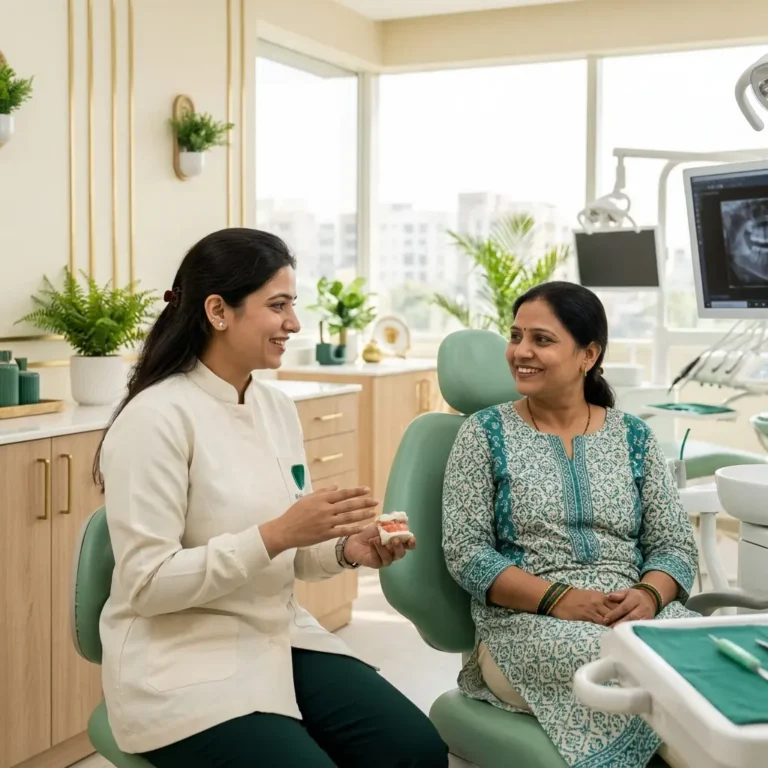
Patient Journey & Preventive Care Walkthrough · Kanpur
Comfort-first dental care · Approx. 8-minute read
Dental Care Questions Residents of Ashok Nagar, Shastri Nagar and Kakadeo Should Ask
Planning a dental visit is easier when you can explain what is bothering you and know what information to ask for. This practical guide helps residents of Ashok Nagar, Shastri Nagar and Kakadeo prepare for an examination at Saluja Dento Max Fac Centre, G.T. Road, Ashok Nagar, Kanpur.
Clinical note: This guide supports preparation, not diagnosis. A dentist must assess symptoms and examination findings in person.
Dental appointment questions at a glance
Describe symptoms with specifics
Note where discomfort is, when it began, what triggers it, how long it lasts and whether it is changing. This gives your dentist a useful starting point.
Bring your health details
Share medicine names, allergies, relevant conditions and previous dental records or X-rays when available.
Ask for a clear plan
Ask what the examination found, which options fit your case, what each involves, and whether follow-up is needed.
Know when not to wait
Facial swelling, fever with dental pain, or difficulty swallowing or breathing needs prompt professional assessment. Breathing difficulty is an emergency.
How to explain tooth pain, swelling or sensitivity clearly
People often struggle to describe dental symptoms because pain may come and go or feel difficult to locate. There is no need to use medical terminology. Concrete observations are more useful than guessing at a diagnosis. Instead of saying only “my tooth hurts,” describe the location as precisely as you can: upper or lower, left or right, front or back, and whether pain seems to involve a tooth, gum, jaw or several areas.
Record when the symptom started and whether it is constant, intermittent, worsening or returning. Mention triggers such as chewing, cold drinks, hot food, sweets, brushing or lying down, and say whether discomfort stops immediately after the trigger or lingers. If biting causes pain, report that rather than repeatedly testing the tooth. A short note on a phone can help if you feel anxious or forget details in the chair.
Pain pattern
When did it begin? Is it sharp, aching, throbbing or pressure-like? Does it wake you, interrupt eating or affect sleep?
Sensitivity
Which stimulus causes it—cold, heat, sweet foods, touch or air? How long does the sensation last after stimulus ends?
Swelling or injury
When did swelling appear? Is it growing? Note trauma, a broken tooth, pus, bleeding or a bad taste. Do not press or puncture a swelling.
These details do not identify the cause by themselves. Sensitivity can have several explanations, including exposed dentine, decay, a crack or gum recession. Persistent or recurring pain deserves assessment even if it temporarily settles. Tell the dentist what you have tried, including medicines or home remedies, and whether they helped or caused a reaction.
Planning a dental appointment in Shastri Nagar or nearby neighbourhoods
For residents arranging a visit from Shastri Nagar, Kakadeo or elsewhere in Kanpur, plan around your own travel time and the clinic’s current schedule. The clinic is at 111A/20A, G.T. Road, near Coca Cola Chauraha, Ashok Nagar, Kanpur 208012; the listed landmark is Shoppers Stop Motijheel. Confirm appointment availability and directions directly before setting out, especially if symptoms are urgent or your schedule is tight.
Online booking is available through the clinic’s appointment page. You can also call +91 99362 93232. Published hours are Monday to Saturday, 10:00 a.m. to 7:30 p.m., and Sunday, 10:00 a.m. to 2:00 p.m.; confirm hours when booking because schedules can change. If you need a longer assessment, have mobility or communication needs, or are bringing a child, mention this while arranging the visit.
When choosing a dentist in Ashok Nagar, Kanpur, or a clinic convenient to Shastri Nagar and Kakadeo, look for clear clinician credentials, a thorough explanation of findings, suitable infection-control procedures, informed consent and a documented care plan. Ask who will assess you, whether imaging may be recommended and how results will be explained. A professional examination may include a review of your health history, visual inspection, gum assessment and imaging only when clinically indicated.
What to bring and what to tell the dental team
Bring a list or photographs of current medicines, including prescription drugs, over-the-counter products and supplements. Include known allergies or past reactions, relevant medical conditions, pregnancy if applicable, and any history that could affect treatment or anaesthesia. Do not stop prescribed medicine unless the prescribing clinician advises you to do so. If you have recent dental X-rays, reports, referral notes or treatment records, take them along; the dentist will decide whether they are useful or whether new imaging is needed.
For children, bring the child’s relevant health information and explain their symptoms in age-appropriate terms. A parent or guardian should be ready to discuss the child’s medical history, previous dental experiences and concerns. If someone else will accompany you or help make decisions, arrange that in advance where possible.
Tell the dentist about dental anxiety, a strong gag reflex, difficulty lying back, hearing or language needs, or a previous unpleasant experience. These are legitimate care considerations, not inconveniences. Agree on a signal to pause if you need a break. Do not feel obliged to accept a procedure before you understand its purpose, likely benefits, risks, alternatives and what may happen if you defer it.
Three phases of a prepared dental visit
Phase 1: Before the visit
Book an appropriate appointment, note symptom timing and triggers, gather medicines and records, and write down your top questions. Call ahead if symptoms worsen or swelling develops.
Phase 2: Examination and discussion
Describe the concern in your own words. The dentist may examine teeth, gums and bite, ask about health history and recommend imaging when needed to clarify a finding. Ask what each test is intended to show.
Phase 3: Plan and home care
Review the findings and options together. Confirm next steps, expected number of visits where known, aftercare instructions, warning signs and how to arrange follow-up. Request written guidance if helpful.
Questions worth asking during an examination
You do not need to ask every question. Start with what matters most to you, then make sure you leave understanding the next step. Clear questions can turn a rushed-feeling visit into a shared decision.
| Topic | Questions to consider | Why it helps |
|---|---|---|
| Finding | What did the examination show? What might explain this symptom? Is further assessment needed? | Separates observed findings from possibilities and clarifies uncertainty. |
| Options | What are reasonable options for my situation? What are benefits, risks and limitations of each? | Supports informed choice rather than assuming one treatment fits everyone. |
| Timing | How soon should I act? What signs mean I should contact you sooner? | Helps prioritize care and recognize changes that require reassessment. |
| Aftercare | What should I do at home? Which symptoms after treatment are expected, and which need a call? | Gives practical guidance for recovery and follow-up. |
If treatment is proposed, ask whether it can happen at the same visit or needs a separate appointment, and whether a referral is appropriate. Ask the clinician to explain unfamiliar terms in plain language. For a complex decision, you can request time to consider options or ask for a copy of the treatment plan. This is a normal part of informed consent.
Common assumptions: a brief reality check
“No pain means no dental problem.”
Not always. Some tooth or gum conditions can be present without obvious pain. Routine assessment helps a dentist identify concerns that symptoms alone may not reveal.
“A symptom disappearing means it is fixed.”
Symptoms can fluctuate. Relief does not establish that the underlying cause has resolved. Tell the dentist about the episode even if it has eased.
“A dental X-ray is automatic.”
Imaging is selected according to clinical need and history. Ask what image is recommended and how it may help; the clinician should explain the rationale.
Daily habits that support oral health
Appointment preparation matters, but everyday care also supports teeth and gums. Brush twice daily with fluoride toothpaste, using a soft-bristled brush and gentle technique along the gumline. Clean between teeth daily with floss or another suitable interdental aid. Spit after brushing rather than rinsing immediately, so fluoride remains in contact with teeth. Limit frequent sugary snacks and drinks; repeated exposure through the day can increase risk of decay. Water is a useful drink between meals.
Do not use sharp objects to remove material between teeth, and do not place aspirin, concentrated clove oil or other caustic substances directly on a tooth or gum. These can injure oral tissues. If a specific product or technique is uncomfortable, ask your dentist to tailor advice to your mouth, dexterity, restorations and medical needs. Children, people with gum disease, dry mouth, braces or complex medical histories may need individualized guidance.
Routine recall timing depends on individual risk and clinical findings; there is no single interval that is right for everyone. Ask your dentist how often you should return and what signs you should monitor at home. Regular preventive visits are not a substitute for prompt evaluation of new, persistent or worsening symptoms.
When symptoms need prompt professional assessment
Contact a dental professional promptly for severe or worsening toothache, facial or gum swelling, pus, fever accompanying dental pain, a dental injury, or difficulty opening your mouth. Call emergency services or seek emergency medical care if you have difficulty breathing or swallowing, rapidly spreading swelling, or swelling affecting the eye or neck. Do not wait for a routine appointment when these warning signs are present.
Until assessed, keep the area clean and avoid chewing on a painful tooth. Use only medicines that are safe for you and follow label directions or advice from a qualified clinician; do not exceed recommended doses or combine medicines without checking. Antibiotics are not a substitute for dental treatment and should only be taken when prescribed. If you are uncertain how urgently to be seen, explain symptoms and changes when calling so the clinic can advise on next steps.
Frequently asked questions
What should I say when booking a dental appointment?
Give a concise description of the main problem, when it began, whether pain is worsening, and whether swelling, fever, injury or difficulty swallowing is present. Mention if you need an urgent assessment, and share any access or communication needs. The team can help determine the appropriate appointment timing.
Should I bring previous dental X-rays?
Yes, if available, along with reports or referral notes. The dentist will decide whether they are relevant and sufficiently current for your assessment. Do not delay urgent care while trying to obtain old records.
How can I prepare if I feel nervous about dental treatment?
Tell the team when booking and again at the visit. Explain what worries you, ask what will happen before each step, and agree on a pause signal. You can ask about options for comfort and request clear explanations before consenting.
Can I wait if tooth sensitivity comes and goes?
Intermittent symptoms can still warrant assessment, especially if they persist, recur, worsen or affect chewing. Record triggers and duration and arrange an examination. Seek prompt advice if pain is severe or swelling or fever occurs.
Plan your visit with Saluja Dento Max Fac Centre
Residents of Ashok Nagar, Shastri Nagar and Kakadeo can arrange an examination at the G.T. Road, Ashok Nagar clinic. Bring your symptom notes and health information; the dental team can assess your concern and explain suitable next steps.
Book an appointment online or call +91 99362 93232. Address: 111A/20A, G.T. Road, near Coca Cola Chauraha, Ashok Nagar, Kanpur 208012.
Explore more dental care guidance
Browse the clinic’s dental health articles or learn about available dental treatments.