

Dental Treatments · Follow-up guide · 7-minute read
Pain or Swelling Near a Tooth After Root Canal Treatment
Some tenderness after root canal treatment can happen while tissues around the root settle. Pain or swelling that returns, worsens, or does not follow an improving course deserves dental assessment. It does not automatically mean treatment has failed, but symptoms should not be diagnosed at home.
Medically reviewed and fact-checked: Patient education from Saluja Dento Max Fac Centre. This guide supports, but does not replace, an examination.
Start with urgency: what to do now
Seek emergency medical care now
Get urgent emergency help for difficulty breathing or swallowing, rapidly spreading swelling into the face, neck or around the eye, or feeling severely unwell. These symptoms can signal spreading infection and should not wait for a routine dental appointment.
Contact your dentist promptly
Arrange prompt dental advice for visible gum or facial swelling, pus or a bad taste, fever, escalating or severe pain, or a tooth that feels increasingly painful to bite on. If swelling is growing or pain is hard to control, call the same day.
Track the trend
Note when symptoms began, whether they are improving, and any new swelling or fever.
What can be expected after root canal treatment?
Root canal treatment removes inflamed or infected tissue from inside a tooth, cleans and shapes its canal system, and seals the space. The tissues around the root can remain irritated after treatment, even though the nerve tissue inside the tooth has been removed. A tooth may feel bruised, tender to touch, or mildly sore when chewing for a short period. The exact course varies with the original infection, the tooth’s anatomy, and the treatment performed.
The key is direction over time. Mild discomfort that gradually settles is different from pain that intensifies, returns after a symptom-free interval, or comes with swelling. There is no single number of days that safely explains every case. Contact the treating dentist if pain is not improving as expected, interferes with sleep or normal eating, or concerns you. Swelling should be taken seriously rather than watched indefinitely.
Do not assume every symptom means a failed root canal. Equally, do not dismiss persistent tooth pain after root canal simply because soreness can occur during healing. A dentist needs to connect your history with clinical findings and, when indicated, imaging.
Possible causes of pain or gum swelling near a root canal tooth
Healing inflammation around the root
Instrumentation and disinfection can temporarily irritate tissues around the root tip. This may cause tenderness to pressure or biting. It should generally trend toward improvement; worsening symptoms or new swelling need review.
Bite feels too high
A temporary or final restoration that contacts first can overload the tooth when you close your teeth. This often feels like a tooth that hits before its neighbours or hurts during chewing. A dentist can assess the bite and adjust the restoration if needed; do not file it yourself.
Persistent or recurring infection
Complex or narrow canals can be difficult to clean completely. In some cases, bacteria remain or re-enter through a leaking, damaged, or delayed restoration. Infection around the root may cause ongoing tenderness, a gum pimple, drainage, or swelling. Only examination can establish the cause.
Crack, fracture, or restoration problem
A crack in the tooth, a fractured cusp, a loose filling, or a damaged crown can produce pain on biting and allow contamination. Root canal treatment treats the inside of a tooth; it does not make the remaining tooth immune to fracture. A dentist checks the restoration and remaining tooth structure.
Nearby tooth, gum, or sinus source
Pain felt near a treated tooth may arise from a neighbouring tooth, gum inflammation, jaw muscles, or—in upper back teeth—sinus pressure. Pain location alone cannot reliably identify its source. Assessment should include surrounding teeth and tissues, not only the treated tooth.
Unusual nerve-related pain
If dental causes are not found, clinicians may consider non-tooth sources, including persistent nerve pain, and decide whether specialist assessment is appropriate.
What happens during a root canal follow-up assessment?
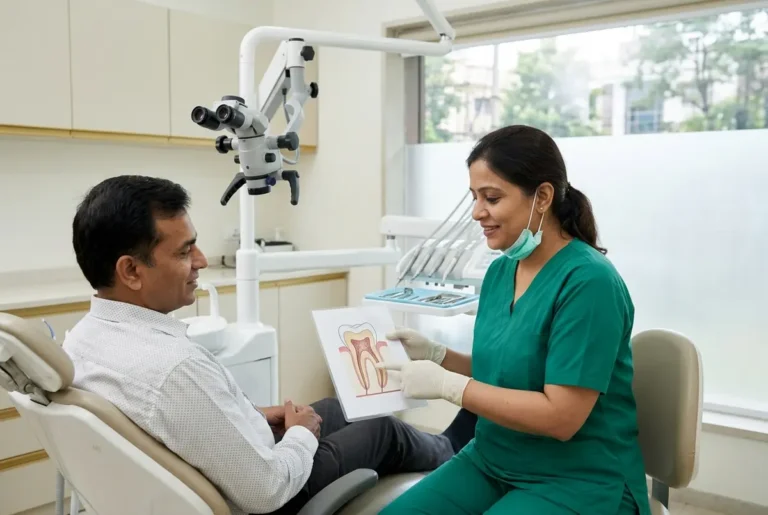
A root canal follow-up assessment is meant to identify the source and severity of symptoms, then choose a proportionate plan. Tell the dentist exactly when symptoms began and how they have changed; this history helps distinguish healing soreness from a new or persistent problem.
01 · Symptom history
The dentist may ask about the treatment date, whether it was completed or left with a temporary filling, pain pattern, biting sensitivity, swelling, drainage, fever, medications, allergies, and relevant health conditions.
02 · Examination
The tooth and nearby gum are inspected for tenderness, swelling, a draining spot, restoration damage, cracks, and bite contacts. Nearby teeth and other possible sources may also be tested. A single test rarely provides the whole answer.
03 · Imaging when indicated
A dental X-ray may help assess the roots, surrounding bone, previous filling, and changes over time. Imaging has limits: a small or early problem may not be obvious on a two-dimensional image. The dentist decides whether additional views or specialist evaluation would help.
04 · Explanation and plan
Recommendations depend on findings. Options may include monitoring with a planned review, bite adjustment, repairing or protecting the restoration, endodontic retreatment, root-end surgery, or extraction when the tooth cannot be predictably restored. Not every painful tooth needs retreatment or antibiotics.
Symptom pattern and sensible next step
| What you notice | Possible interpretation | Next step |
|---|---|---|
| Mild soreness after treatment, gradually easing | Temporary tissue irritation may be part of recovery. | Follow post-treatment instructions; contact dentist if improvement stalls or concern remains. |
| Pain on biting or tooth feels high | Bite contact, inflammation, or a structural issue may contribute. | Arrange a dental check, especially if pain persists or worsens. |
| New gum swelling, pus, or bad taste | Possible drainage or infection; cause needs examination. | Contact dentist promptly, ideally same day if swelling is increasing. |
| Facial swelling, fever, escalating pain | Potentially significant infection or complication. | Seek urgent dental assessment; emergency care for rapid spread or systemic danger signs. |
| Trouble breathing or swallowing, rapidly spreading swelling | Possible emergency spread beyond local tissues. | Emergency medical care now. |
Safe steps while arranging dental review
- Call the dental practice and describe the root canal date, symptoms, swelling, pain severity, and whether symptoms are worsening. Mention fever, drainage, or difficulty opening your mouth.
- Keep the area clean. Brush gently and continue careful oral hygiene; avoid injuring swollen tissue.
- Choose softer foods and avoid chewing hard or sticky foods on the affected tooth until assessed, particularly if it has a temporary filling or has not yet received its planned definitive restoration.
- Use over-the-counter pain medicine only if it is safe for you and follow its label or advice from a pharmacist or clinician. Consider your allergies, pregnancy status, medical conditions, and interactions with other medicines.
- Do not place aspirin, crushed tablets, alcohol, or caustic substances on the tooth or gum. Do not puncture or squeeze a swelling.
- Do not use leftover antibiotics or someone else’s prescription. Antibiotics are not a substitute for dental treatment and are used only when clinically indicated.
These measures are temporary, not treatment for the underlying cause. If swelling expands or you develop a fever or feel unwell, update the dentist promptly. For breathing or swallowing difficulty, seek emergency medical care.
Clinical note: symptoms need context
Pain after root canal treatment is not a diagnosis by itself. A useful assessment asks whether symptoms are improving, checks the restoration and bite, evaluates surrounding tissues, and considers other teeth or non-dental sources. The safest next step is not to guess whether the canal has failed; it is to have the tooth examined and the findings explained. Early contact can help distinguish a manageable adjustment from a problem needing more care.
Frequently asked questions
How long should pain last after root canal treatment?
There is no fixed timeline for every tooth. Some short-term tenderness can occur, particularly when biting, but it should generally improve rather than intensify. Call your dentist if pain persists without improvement, returns after settling, becomes severe, or is accompanied by swelling.
Does gum swelling near a root canal tooth mean infection?
It can be associated with infection, but swelling has other possible causes and needs examination. A gum pimple, drainage, bad taste, or increasing facial swelling warrants prompt contact. Do not squeeze or puncture the area.
Will I need another root canal?
Not necessarily. The dentist first identifies the source. Depending on examination and imaging, care may involve bite adjustment, restoration repair, observation, endodontic retreatment, root-end surgery, or another option. A neighbouring tooth or non-dental cause may also explain pain.
When should I contact a dentist after root canal treatment?
Contact the dentist if symptoms are worsening, not settling, or recurring; for swelling, drainage, fever, or significant pain, seek prompt advice. Difficulty breathing or swallowing, or rapidly spreading facial or neck swelling, calls for emergency medical care.
Arrange an assessment for returning symptoms
If you have pain or swelling near a tooth after root canal treatment, share your symptoms with your dentist and ask for an appropriate follow-up assessment. Saluja Dento Max Fac Centre provides dental care in Kanpur; use the practice’s official website to find current contact and appointment details.
Related reading
Explore more patient education from the clinic.
Apicoectomy Procedure Steps and Recovery Timeline
Learn apicoectomy procedure steps and recovery timeline, from imaging and root-end surgery to sutures, healing milestones, follow-up care…

Pain or Swelling After Root Canal: Causes & Next Steps
Pain or swelling near a tooth after root canal treatment? Learn common causes, warning signs, what follow-up checks…

What Is an Apicoectomy? Root-End Surgery Explained
Learn what an apicoectomy means, why infection may persist after root canal treatment, how root-end surgery works, and…