
Oral health guide · Saluja Dento Max Fac Centre, Kanpur
What Happens During a Routine Dental Checkup? A Clear Guide to Each Step
A regular visit is not only about spotting cavities. Your dentist reviews your oral health, examines teeth and gums, and discusses practical next steps. Here is what to expect—and why each part matters.
Book an appointment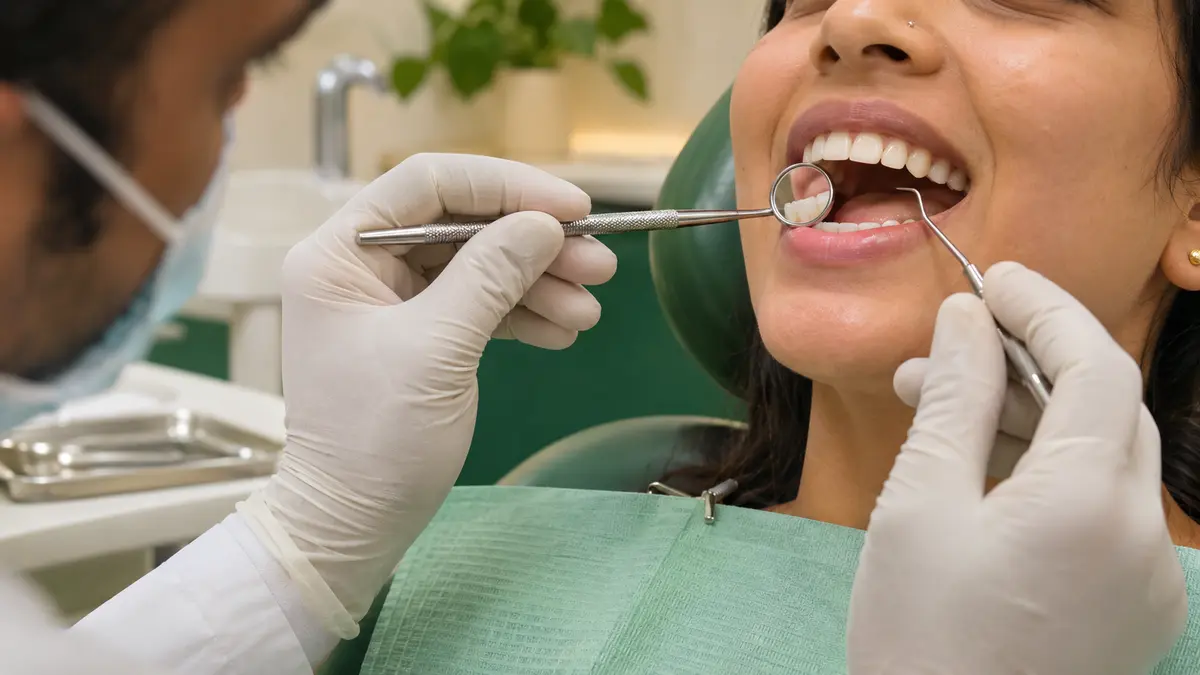
Knowing what happens during a routine dental checkup can make the visit feel more predictable. The exact sequence varies with age, symptoms, dental history and the clinician’s assessment. Not every patient needs every test or procedure at every appointment.
Why routine dental checkups assess more than visible cavities
The purpose of dental checkups is to review oral health, identify concerns that may not yet hurt, and agree on suitable prevention or treatment. Tooth decay can develop between teeth or beneath existing restorations, while gum inflammation may begin with subtle changes. A checkup also gives you time to raise changes such as sensitivity, bleeding, pain, dry mouth or difficulty chewing.
A dental examination is not a guarantee that future problems will not occur. It is a clinical snapshot: the dentist combines what they observe with your history and, where indicated, diagnostic tests. Your recommended recall interval depends on your individual risk and oral health—not a fixed schedule that suits everyone.
Routine dental examination steps: what to expect
These common steps explain what dentists check during an oral exam. Some may happen in a different order or be omitted when they are not relevant.
Health and dental history
Your dentist or dental team may ask about medicines, medical conditions, allergies, previous dental treatment and current concerns. Mention pregnancy, tobacco use, teeth grinding, recent changes in health, and any anxiety or accessibility needs that could affect care.
Symptoms and daily habits
Expect questions about pain, sensitivity, bleeding gums, bad breath or changes in your bite. The team may ask how often you brush and clean between teeth, and about frequent sugary snacks, sweet drinks or acidic foods. This helps tailor advice rather than assign blame.
Teeth and existing dental work
Using a light, mirror and appropriate instruments, the dentist inspects tooth surfaces for visible decay, wear, cracks or damage. They may also examine fillings, crowns and other restorations for signs that need follow-up. An observation alone does not always establish a diagnosis; additional assessment may be needed.
Gums and supporting tissues
The dentist looks for redness, swelling, bleeding or recession. When clinically appropriate, they may measure the spaces between teeth and gums with a periodontal probe. These measurements help assess gum support; they are considered alongside other signs and your history.
Bite, jaw and oral tissues
Your bite and jaw movement may be assessed if symptoms or history make it relevant. The dentist may also look at the tongue, cheeks, palate and other soft tissues for changes that warrant monitoring or further evaluation. Screening is not a diagnosis of cancer or another disease.
Discussion and care plan
At the end, the dentist explains what they found, what remains uncertain and whether any follow-up is advisable. You should have a chance to discuss options, preventive steps, timing and questions before deciding how to proceed.
When might dental X-rays be considered?
X-rays can show areas that a visual examination cannot fully assess, such as some surfaces between teeth, roots or supporting bone. They are not automatically needed at every routine visit. A dentist considers your symptoms, examination findings, dental and medical history, previous images and whether an image could change diagnosis or care.
If imaging is recommended, ask what the image is intended to clarify and whether earlier images can be used. Dental X-rays involve ionising radiation, so clinicians use them when justified and follow appropriate radiation-safety procedures. Tell the team if you are pregnant or might be pregnant before imaging.
What findings can—and cannot—tell you
A routine examination helps identify visible signs and decide whether further checks are warranted. It cannot always reveal the full extent or cause of a concern in one visit. Some findings call for monitoring, imaging, measurements or a closer examination; others may not need treatment. Ask your dentist to explain the evidence behind a recommendation and what alternatives exist.
Questions to ask after your checkup
Clear explanations help you take part in decisions. Consider asking:
- What did you find, and which areas need attention first?
- Is this a confirmed problem or something you want to monitor?
- Why do you recommend an X-ray, cleaning or further assessment?
- What can I do at home to reduce my risk?
- When should I return, and what symptoms should prompt an earlier visit?
Tell the dentist if you did not understand a term or want the explanation repeated. If treatment is suggested, ask about its purpose, benefits, risks and reasonable alternatives. A treatment decision should follow a discussion with your dental professional, not this general guide.
Make your next visit useful
Bring an up-to-date list of medicines, note any symptoms and mention changes since your last visit. If you have pain, swelling, bleeding or another new concern, describe when it began and what makes it better or worse. Routine visits support prevention and planning, while urgent symptoms may need assessment sooner.
Saluja Dento Max Fac Centre provides dental care in Kanpur. To arrange a visit, use the clinic’s appointment page or contact the clinic through its contact page.