
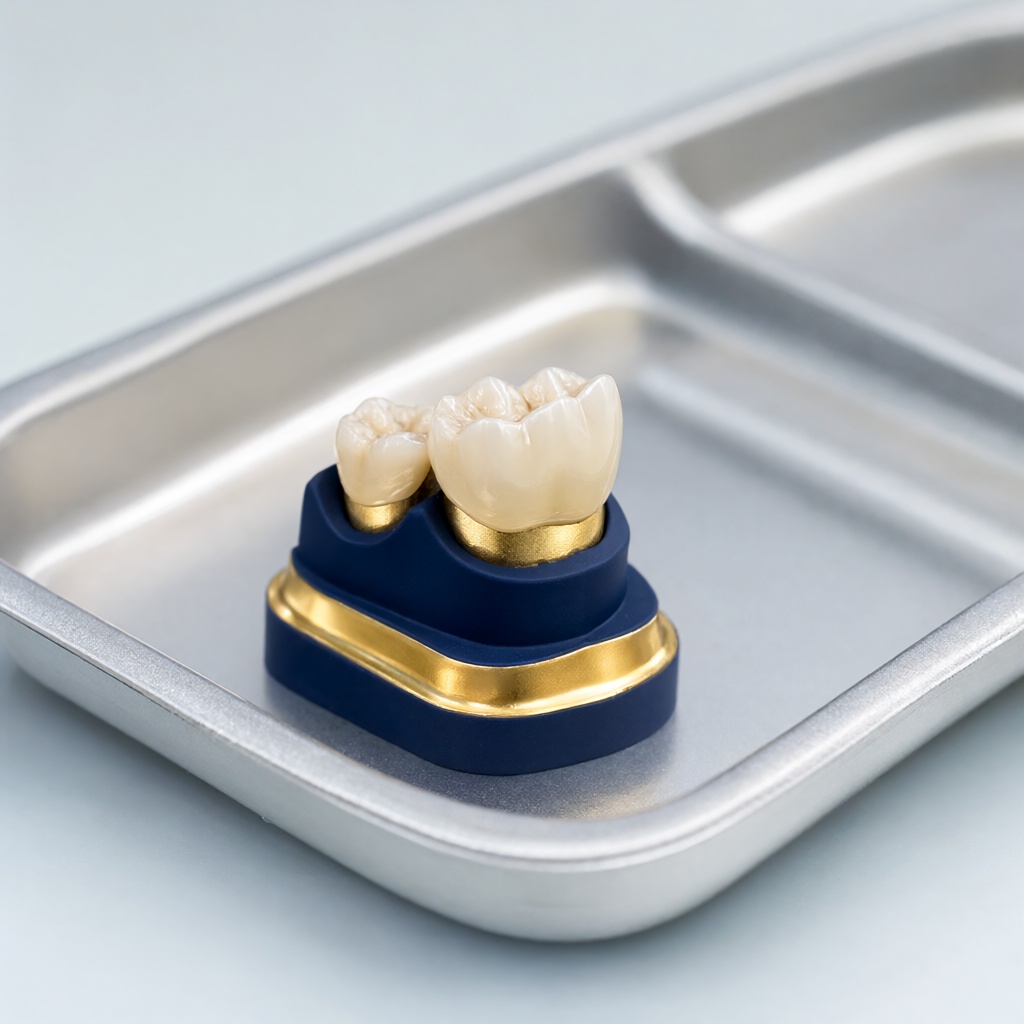
A missing tooth is rarely just a cosmetic problem. Every gap in your arch changes how you bite, how you speak, how food reaches the rest of your mouth, and — over years — how the neighbouring jawbone behaves. Yet most patients in Kanpur make the implant decision far too quickly, often on the basis of a single consultation and a promise of a fixed solution. Choosing dental implants in Kanpur deserves the same structured thinking you would give any surgical procedure. This guide walks you through how implants actually work, the options available, how an implant compares with a bridge or a removable denture over decades, and the specific questions that reveal whether a clinic is genuinely the right place for you.
Why Replacing a Missing Tooth in Kanpur Deserves a Considered Decision
The most common misconception about a missing tooth is that the body simply adapts. It does the opposite. Because the jawbone relies on the physical stimulus of chewing to maintain its density, the moment a tooth is lost that stimulus disappears. Resorption begins within the first months and continues for years. The ridge under a lost molar narrows and shortens, neighbouring teeth drift into the gap, and opposing teeth — the phenomenon known as over-eruption or supra-eruption — begin to grow downwards into the empty space.
The consequences therefore compound. A single gap in the back of the mouth reduces chewing efficiency, which pushes patients to favour the softer side of the diet. Softer food means less fibre and more refined carbohydrates, which affects both nutrition and plaque control. Over-erupted molars create occlusal interference that can trigger headaches, clicking in the temporomandibular joint, and accelerated wear on the opposing natural teeth. In patients who already use a removable partial denture, a shrinking ridge means the acrylic plate loses its seal, rubs the mucosa, and becomes progressively more painful to wear — often to the point where the denture is abandoned entirely.
This is why implant therapy is not simply “a better way to fill a hole”. It is a decision about preserving the long-term integrity of the entire arch. A well-placed implant maintains the functional load on the bone, which helps slow resorption; it restores a natural occlusal contact pattern; and it avoids grinding down healthy enamel on either side of the gap, which is exactly what a traditional three-unit bridge requires. The chapter-by-chapter structure below walks you through every decision point so that the choice becomes informed rather than impulsive.
How Dental Implants Work, and Why Age Is Not a Barrier
A dental implant is, in engineering terms, a titanium post that replaces the root of a tooth. The procedure has four distinct stages, and understanding them is what allows a patient to judge whether a clinic’s plan is sound.
1. Assessment & Planning
Clinical examination, digital or radiographic imaging, and often a CBCT scan to measure bone width, height and density in three dimensions. A surgical guide is then designed to place the implant within the prosthetic envelope — the exact position the final crown will occupy.
2. Placement
Under local anaesthesia, the surgeon prepares a precisely sized osteotomy and seats the implant at the planned depth and angle. Guided surgery, using a digitally printed stent, reduces human error to sub-millimetre accuracy.
3. Osseointegration
Titanium bonds directly with living bone at the cellular level — no fibrous capsule, unlike a natural tooth. This typically takes three to six months, and longer in grafted sites or in patients with reduced bone density.
4. Restoration
Once stability is confirmed, an impression or digital scan is taken, a custom abutment connects the implant to the crown, and the final ceramic or zirconia restoration is cemented or screw-retained into position.
Two modern protocols have compressed the timeline considerably. In immediate loading, a temporary crown is fitted within 48–72 hours of placement, provided primary stability exceeds a defined threshold — typically an insertion torque or stability quotient above a clinician-determined cut-off. In immediate placement, the implant is inserted into the extraction socket in the same appointment as the tooth removal, which is valuable when the socket walls are intact and infection is not present. Neither protocol is universally appropriate; both demand careful case selection, and a surgeon who offers either for every patient is telling you something about their judgement.
On age: patients frequently assume they are “too old” or “too young”. Neither is automatically true. The determining factor is skeletal maturity and bone quality, not the calendar. A patient in their late teens whose jaw growth has completed may be an excellent candidate; a patient in their late sixties with dense, healthy bone may also be an excellent candidate. Conversely, uncontrolled diabetes, untreated periodontitis, smoking, certain bisphosphonate medications and untreated osteoporosis meaningfully raise the risk of failure — but each of these is a reason to optimise first and reconsider second, not a permanent veto. Many practices will stabilise blood sugar, complete periodontal therapy, and then proceed with a modified protocol.
Indications Across a Kanpur Implant Practice
Approximate distribution of implant cases by primary indication, reflecting patterns commonly reported for single-tooth and full-arch referral.
Types of Implants Available and How Kanpur Patients Choose Between Them
“Implant” is used loosely in conversation to describe an entire treatment, which makes comparisons confusing. A patient choosing between a single-tooth implant and a four-implant full-arch reconstruction is not comparing two options — they are comparing two completely different problems. Here is the terminology that actually matters.
| Type | Where it sits | Best-suited case | Key consideration |
|---|---|---|---|
| Endosteal (screw-form) | Ridge, inside the jawbone | Single tooth, multiple teeth, most edentulous cases | Requires adequate bone height and width, or grafting |
| Mini / small-diameter | Ridge, narrow profile | Single tooth with tight mesiodistal space; orthodontic anchorage | Lower load capacity; sometimes interim during grafting |
| Subperiosteal | On top of the bone, under the gum | Ridge too narrow for a conventional fixture | Less commonly used; higher maintenance burden |
| Zygomatic | Anchored into the cheekbone | Severe upper-jaw bone atrophy avoiding a graft | Specialised procedure; limited to experienced centres |
| All-on-4 / All-on-6 | Four or six angled implants | Fully edentulous arch; immediate fixed teeth | Requires prosthetic-driven planning and meticulous hygiene |
| Overdenture | Two or four implants with a clip-on denture | Edentulous patients wanting more stability than a loose plate | Removable component; requires periodic relining |
| Short / narrow-diameter | Reduced-length fixture | Limited vertical bone height, avoiding nerve repositioning | Not a substitute for adequate bone volume |
Beyond anatomy, the second axis of choice is the prosthetic design — the visible component. A single implant crown may be screw-retained, which means it can be removed repeatedly for maintenance without destroying the restoration, or cement-retained, which is often easier to achieve ideal emergence profile with. Full-arch cases usually favour a milled titanium bar or a high-strength zirconia framework, while individual crowns are commonly layered porcelain or monolithic zirconia matched to the patient’s natural shade. A good implant surgeon plans backwards from the tooth they intend to build; if the conversation begins with implant brands rather than the final tooth, the planning is inverted.
What Sets an Implant Apart From a Bridge or Denture Over the Long Term
Every treatment option is legitimate for somebody. The question is never “which is best” in the abstract — it is “which best matches the condition of my mouth, my budget structure, my health and my tolerance for maintenance”. The table below compares the three principal options on the dimensions patients actually experience.
| Parameter | Implant | Fixed Bridge | Removable Denture |
|---|---|---|---|
| Effect on adjacent teeth | None — teeth untouched | Requires full preparation of one or two healthy teeth | None initially; may cause clasping wear |
| Bone preservation | Maintains functional load on the ridge | No direct stimulation at the gap | Ridge resorbs progressively under the plate |
| Hygiene | Brushable like a natural tooth; floss/threader around abutment | Bridge pontic traps food; difficult to floss beneath | Must be removed daily for cleaning |
| Comfort | Feels close to natural; no pressure points | Natural until pontics wear or abutments loosen | Ridge soreness, movement and bulk sensation common |
| Longevity | Often 25–30+ years with maintenance | Typically 7–15 years before replacement | Relining/rebasing every 3–5 years |
| Ongoing maintenance | Professional review, hygiene visits, occasional screw retightening | Monitoring of abutment caries and endo status | Frequent adjustments; risk of fungal stomatitis |
| Impact on bone | Osseointegrates — direct bone contact | No integration | Resorption accelerates after the first year |
Service Life Before Replacement Is Needed
Indicative years of expected service for each replacement option, based on widely reported clinical longevity data. Individual results vary.
The honest counterpoint is that an implant is not maintenance-free. Peri-implant mucositis — inflammation of the gum tissue around an implant without bone loss — is the single most common complication and is almost always the direct result of inadequate cleaning. Treated early, it reverses completely. Ignored, it progresses to peri-implantitis, which destroys supporting bone and may eventually cost the implant. A patient who will not commit to a soft brush, an interdental brush used daily, and regular professional hygiene should think seriously about whether an implant is the right commitment for them.
“An implant is not a purchase of a tooth — it is a long-term biological and mechanical partnership with the jawbone, and it succeeds only when the patient becomes part of that partnership.”
Questions to Ask About Surgeon Qualifications, Sterilisation and Aftercare
A consultation is a two-way assessment. You are evaluating the surgeon exactly as they are evaluating your bone. These are the questions worth asking — and, frankly, worth watching how they are received. A confident, transparent answer is itself a strong signal.
- What is your specific implant qualification? Ask for the exact degree and the training completed in implantology. A postgraduate MDS degree in Oral and Maxillofacial Surgery or Prosthodontics, together with a documented implant fellowship or formal implant training programme, is the baseline you should expect for surgical placement.
- How many implants have you placed, and what is your failure rate? Volume matters enormously. Ask how many cases of your type — single anterior tooth, full arch, grafted ridge — the surgeon performs annually, and how they handle complications, including cases they have referred onwards.
- Will I see a CBCT scan of my own jaw? Implant placement is a three-dimensional procedure. If a clinic plans placement from a single two-dimensional periapical radiograph, the risk of hitting the inferior alveolar nerve or perforating the sinus floor rises sharply. Insisting on viewing your own scan is entirely reasonable.
- Is guided or computer-assisted surgery used, and who designed the guide? Digital planning with a surgically designed guide improves accuracy measurably. Ask whether the guide is designed from your scan or is a generic template.
- How is instrumentation sterilised? Implant drills and osteotomes are heat-sensitive and cannot be autoclaved in every cycle. Ask whether a dedicated vacuum-class autoclave and validated pouches are used, whether single-use components are genuinely single-use, and how implant fixtures themselves are handled before opening.
- Who places the implant and who fabricates the crown? Some clinics delegate the surgical stage. Understanding exactly which qualified clinician is in the chair for each step matters, because the surgical error is the one that cannot be undone.
- What happens if the implant fails? Every responsible surgeon discusses failure risk and how they will manage it. Ask about their grafting and revision policy in writing, and what the referral pathway looks like if an implant has to be removed.
- What is your aftercare and maintenance schedule? A good practice defines review intervals — typically at one week, one month, three months and then every six to twelve months — and includes professional cleaning, periodontal assessment and review of soft tissue health.
NABH Accreditation, MDS Surgeons and Safety Standards in Kanpur
If you have searched for the best dental implant clinic in Kanpur, you will have seen a great deal of marketing. Beyond branding, three verifiable markers separate a facility that operates to recognised standards from one that simply advertises well.
The Patient’s Pre-Treatment Checklist
Verification steps worth completing before consenting to any implant procedure — and how many clinics will confirm each on request.
Two further practical warnings. First, be cautious of any clinic that guarantees a fixed outcome or a completion date before imaging has been taken — osseointegration cannot be time-boxed in advance of knowing bone quality. Second, be cautious of clinics marketing implants with no consultation, no scan and no follow-up protocol at all. Implant therapy is a surgical discipline with a lifelong maintenance component, and any provider who treats it as a same-day product is misrepresenting what it is.
Key Takeaways and Your Next Step
Choosing dental implants in Kanpur is a decision about biology, sequencing and long-term maintenance — not a purchase decision. Summarising what matters most before you commit to any clinic:
- Treat it as surgery, not a product. Implant placement involves cutting bone. The credentials of the operating clinician and the sterilisation standards of the facility matter more than any implant brand.
- Insist on three-dimensional imaging. CBCT-guided planning from your own scan is the single clearest differentiator between a planned and an improvised procedure.
- Compare options honestly. An implant preserves adjacent teeth and bone in a way no bridge or denture can, but it demands lifelong hygiene and periodic review. A patient unwilling or unable to maintain it should be guided toward the better alternative.
- Optimise health first. Smoking, uncontrolled diabetes and active gum disease should be addressed before surgery. Clinicians who refuse to delay treatment when the foundations are unstable are not protecting you.
- Get the aftercare plan in writing. Review intervals, cleaning protocol, what triggers a warning contact, and how complications are handled. If it is not documented, it is not a protocol.
How long does the entire implant process take?
A straightforward single-tooth implant typically involves placement on day one, a healing period of three to six months for osseointegration, and final crown delivery a few weeks after that. Immediate loading and immediate placement can shorten this considerably in selected cases. Full-arch reconstructions follow a similar biological clock even when the temporary teeth are fitted on day one.
Will I lose bone where the tooth was removed?
Some resorption is unavoidable, but it is far slower and much less pronounced when the gap is filled with an implant that carries functional load. Immediate placement can preserve the socket walls better than delayed placement. If significant bone has already been lost, augmentation before or alongside implant placement may be recommended.
Is dental implant treatment painful?
Placement is performed under local anaesthesia and is comparable to having a tooth extracted — most patients report pressure and vibration rather than pain. Post-operative discomfort is usually managed with standard analgesics and settles within two to three days. Most patients return to routine activity within a day or two.
How do I know which type of implant I need?
That cannot be determined from a photograph or a verbal description. It requires clinical examination plus radiographs showing bone volume and density. A responsible surgeon will not recommend an implant type — endosteal, zygomatic, All-on-4 or overdenture — before imaging has been taken and assessed.
What is the single biggest cause of implant failure?
Peri-implantitis — bone loss around a functioning implant — and it is overwhelmingly linked to plaque accumulation where daily cleaning is inadequate, compounded by smoking. Early-stage mucositis is reversible; established peri-implantitis requires surgical intervention and sometimes implant removal. This is why the maintenance discussion at consultation matters so much.
Ready to Discuss Your Implant Options?
Bring every question from this guide to your consultation — your scans in hand, if you have them. At Saluja Dento Max Fac Centre, Kanpur, implant planning begins with a full clinical and radiographic assessment so that the recommendation is built around your bone, your health and your long-term goals rather than a fixed treatment package.
Book Your ConsultationRelated Articles
Clear Aligners vs Braces for Adults in Kanpur: A Full Guide
Cosmetic & Aesthetic Dentistry • 11 min read Clear Aligners vs Braces for Adults in Kanpur: How Each…
What Is Osseointegration in a Dental Implant? | Kanpur Guide
Dental Implants · Implantology · 9 min read What Is Osseointegration — and Why It Decides Whether Your…
What Is Osseointegration? How a Dental Implant Fuses With Bone
Dental Implants • 12 min read What Is Osseointegration? Why a dental implant must literally grow into the…